There are at least 3 kinds of systems that can potentially guarantee that everybody in a jurisdiction is covered for medical and hospital care. These include needing or mandating health insurance coverage, supplying insurance coverage (however not care) through a single federal government payer, and socialized medication, in which both insurance coverage and medical care are handled by the government.
The government might support part of the premiums however a lot of insurance is offered by private companies. Germany's system, for instance, includes both for-profit and not-for-profit insurance companies. Needing health insurance has helped some nations, including Germany, the Netherlands, and Switzerland, attain universal protection. In the U.S. how many countries have universal health care., the 2010 Affordable Care Act established a similar requirement and system.
The Tax Cuts and Jobs Act (TCJA) reversed the penalty, starting in 2019. Some U.S. states (California, Massachusetts, New Jersey, Rhode Island, Vermont) and the District of Columbia levy their own charges on those who do not buy health insurance. Considering that 2006, Massachusetts, for instance, has actually needed its citizens to have medical insurance or pay a fine.
5% in the state. Under a single-payer system, all health expenses are paid by the federal government utilizing tax revenue. This permits nations to manage costs, in part, by having the federal government play a more powerful role in working out rates for healthcare. Medical insurance is universal and provided by a single entity.
The Main Principles Of Which Of The Following Is True About The Health Care Latinos Receive?
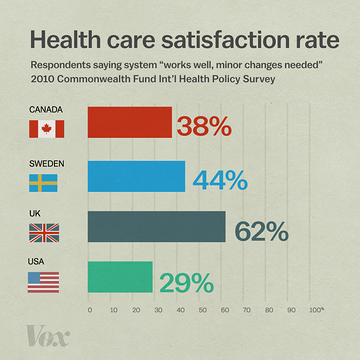
Examples of this design consist of Canada and France. In both of these nations, private-sector insurance providers also exist, however they play a bit part as providers of additional protection. In these systems, both insurance and treatment are offered by the government. In the United Kingdom's National Health Service, for example, the government owns most of the healthcare facilities and employs medical suppliers.
Mingled systems are less typical than single-payer ones. The coronavirus crisis has actually increased pressure on America's extremely intricate and expensive health care system, making it more urgent to reduce expenses and maybe provide universal healthcare. In the U.S., the ACA increased the variety of insured people, however has actually not attained universal health care protection.
adults without health insurance coverage stood at 13. how many health care workers have died from covid. 7%. The other 86% of individuals have medical insurance through a mix of federal government and personal insurance suppliers. Worldwide of employer-based insurance, large business frequently utilize a mix of private and self-insurance to cover a portion of their workers' health costs.
A few of the best Medicare Advantage plans are excellent examples. Recipients of Medicaid choose a private insurance coverage prepare for which state and federal governments pay much of the expenses. This mix of methods might motivate competitors and entrepreneurial chances, and deal consumers option and incentives to attempt to keep healthcare costs down.
The 8-Minute Rule for What Does A Health Care Administration Do
The United States does not have universal medical insurance coverage. Nearly 92 percent of the population was estimated to have protection in 2018, leaving 27. 5 million individuals, or 8. 5 percent of the population, uninsured. 1 Motion towards protecting the right to health care has actually been incremental. 2 Employer-sponsored health insurance was introduced throughout the 1920s.
In 2018, about 55 percent of the population was covered under employer-sponsored insurance coverage. 3 In 1965, the very first public insurance programs, Medicare and Medicaid, were enacted through the Social Security Act, and others followed. Medicare. Medicare guarantees a universal right to healthcare for individuals age 65 and older. Eligible populations and the variety of benefits covered have actually gradually broadened.
All beneficiaries are entitled to conventional Medicare, a fee-for-service program that supplies healthcare facility insurance (Part A) and medical insurance (Part B). Given that 1973, recipients have actually had the choice to receive their coverage through either standard Medicare or Medicare Benefit (Part C), under which individuals register in a private health care company (HMO) or managed care organization.
Medicaid. The Medicaid program first gave states the alternative to get federal matching funding for providing health care services to low-income households, the blind, and people with disabilities. Coverage was gradually made necessary for low-income pregnant women and infants, and later for kids approximately age 18. Today, Medicaid covers 17.
Some Of How Much Does Medicare Pay For Home Health Care Per Hour?
As it is a state-administered, means-tested program, eligibility requirements differ by state. Individuals require to make an application for Medicaid protection and to re-enroll and recertify each year. As of 2019, more than two-thirds of Medicaid beneficiaries were enrolled in handled care companies. 4 Children's Medical insurance Program. In 1997, the Kid's Health Insurance coverage Program, or CHIP, was created as a public, state-administered program for children in low-income households that make excessive to qualify for Medicaid however that are unlikely to be able to manage personal insurance.
6 million kids. 5 In some states, it runs as an extension of Medicaid; in other states, it is a different program. Cost Effective Care Act. In 2010, the passage of the Patient Protection and Affordable Care Act, or ACA, represented the biggest growth to date of the government's role in funding and regulating health care.
The ACA resulted in an approximated 20 million gaining coverage, reducing the share of uninsured adults aged 19 to 64 from 20 percent in 2010 to 12 percent in 2018. 6 The federal government's obligations include: setting legislation and national strategies administering and spending for the Medicare program cofunding and setting standard requirements and regulations for the Medicaid program cofunding CHIP financing health insurance for federal staff members in addition to active and past members of the military and their families regulating pharmaceutical products and medical devices running federal markets for personal health insurance providing premium subsidies for personal market protection.
The ACA developed "shared responsibility" amongst government, employers, and individuals for ensuring that all Americans have access to cost effective and good-quality medical insurance. The U.S. Department of Health and Person Services is the federal https://www.openlearning.com/u/delaine-qgegm7/blog/TheSmartTrickOfIdentifyTheReasonsWhyDoctorsWieldPowerInTodayaeusHealthCareSystemThatNobodyIsDiscussing/ government's principal firm involved with healthcare services. The states cofund and administer their CHIP and Medicaid programs according to federal policies.
5 Easy Facts About How Much Would Single Payer Health Care Cost Described
They also assist finance medical insurance for state employees, control private insurance coverage, and license health experts. Some states also handle medical insurance for low-income homeowners, in addition to Medicaid. In 2017, public spending represented 45 percent of overall health care costs, or roughly 8 percent of GDP. Federal costs represented 28 Find more information percent of overall healthcare costs.

The Centers for Medicare and Medicaid Services is the largest governmental source of health protection financing. Medicare is funded through a mix of general federal taxes, a mandatory payroll tax that pays for Part A (medical facility insurance), and private premiums. Medicaid is mainly tax-funded, with federal tax earnings representing two-thirds (63%) of expenses, and state and regional profits the rest.
CHIP is moneyed through matching grants supplied by the federal government to states. Many states (30 in 2018) charge premiums under that program. Spending on personal medical insurance accounted for one-third (34%) of total health expenses in 2018. Private insurance is the primary health coverage for two-thirds of Americans (67%).
A lot of companies agreement with personal health plans to administer advantages. Most company plans cover workers and their dependents, and the bulk offer a choice of several strategies. 8,9 Both companies and staff View website members generally contribute to premiums; much less regularly, premiums are fully covered by the employer. The ACA presented a federal marketplace, Health care.